Well-ness Affordable Housing in Denver
From Obselesence to Renaissance
Denver’s built environment, like most American cities, is plagued with a daunting contradiction: a surfeit of office space and a deficit of affordable housing. Following the pandemic, nearly 50% of downtown Denver’s high-rises remain empty. At the same time, housing precarity has never been more accute. 25% percent of renters spend over 50% of their income on rent. In 2024 alone, there were14,000 evictions in Denver: an increase of nearly 20% from the previous year. Due more to economic disparity than any other factor, Colorado’s homeless population grew by 90% between 2020-2024; it grew by 134% for families with children in 2024. And yet, because of the sheer excess of unrentable office space, there is enough existing architecture in downtown Denver to provide much of the city’s deficit in a affordable housing. The problem, however, is that the majority of currently underutilized commercial architecture is unsuitable for any easy conversion into healthy and appealing domestic architecture. By one estimate, 90% of hi-rises in America are ineligible for conversion, because their floorplates are too deep to allow adequate light penetration. This is where our Well-ness proposition intervenes: less a single piece of architecture than an architectonic technique of adapting large commercial hi-rises into affordable housing that, in the process, also escapes the pitfalls of American affordable housing design.
Well-ness: Let there be light
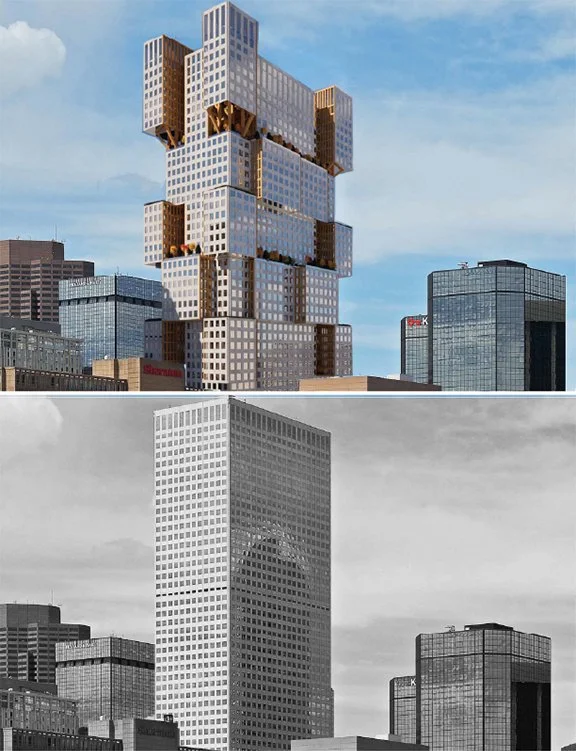
The conventional architectural solution to adapting old commercial stock, with deep floor plates that limit light penetration, is to create a light well by extracting floor area from the upper floors of an existing structure, thereby introducing light into the core of the building. This approach, however, is both costly and limiting. For one, it is not adaptable to hi-rises, only low or middle rise buildings. For every floor a lightwell penetrates, its area must be expanded, losing valuable rentable space in the most coveted levels of a hi-rise. Secondly, this solution undermines the premise of creating more affordable housing: the goal is increasing, not decreasing supply. So how can we add light and housing to large commercial buildings? Well-ness proposes two solutions to the most daunting building in the Denver skyline: Republic Tower: a 134,000 sqft commercial building that is 1/2 empty and nearly foreclosed in 2023.
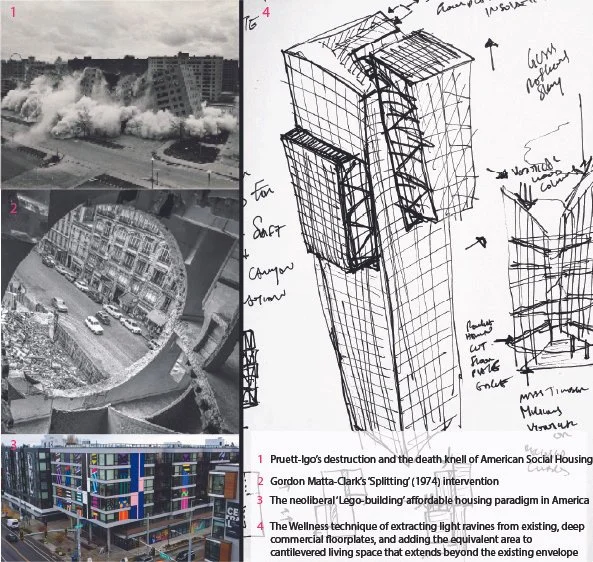
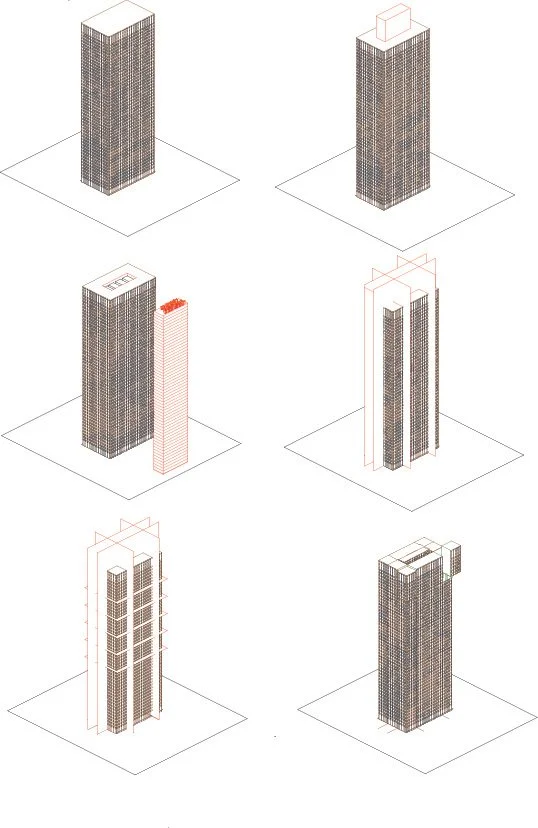
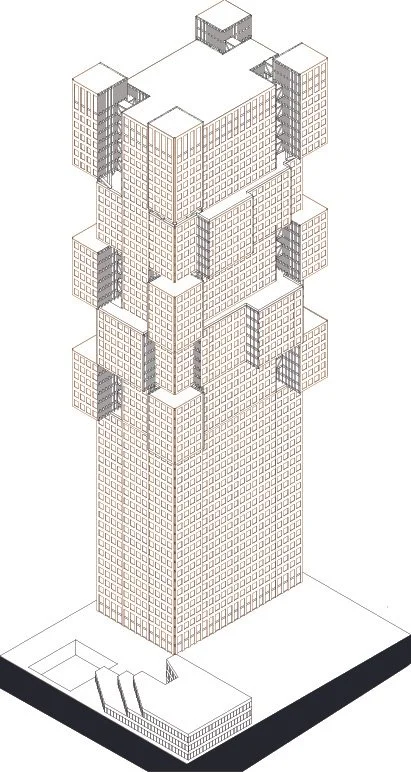
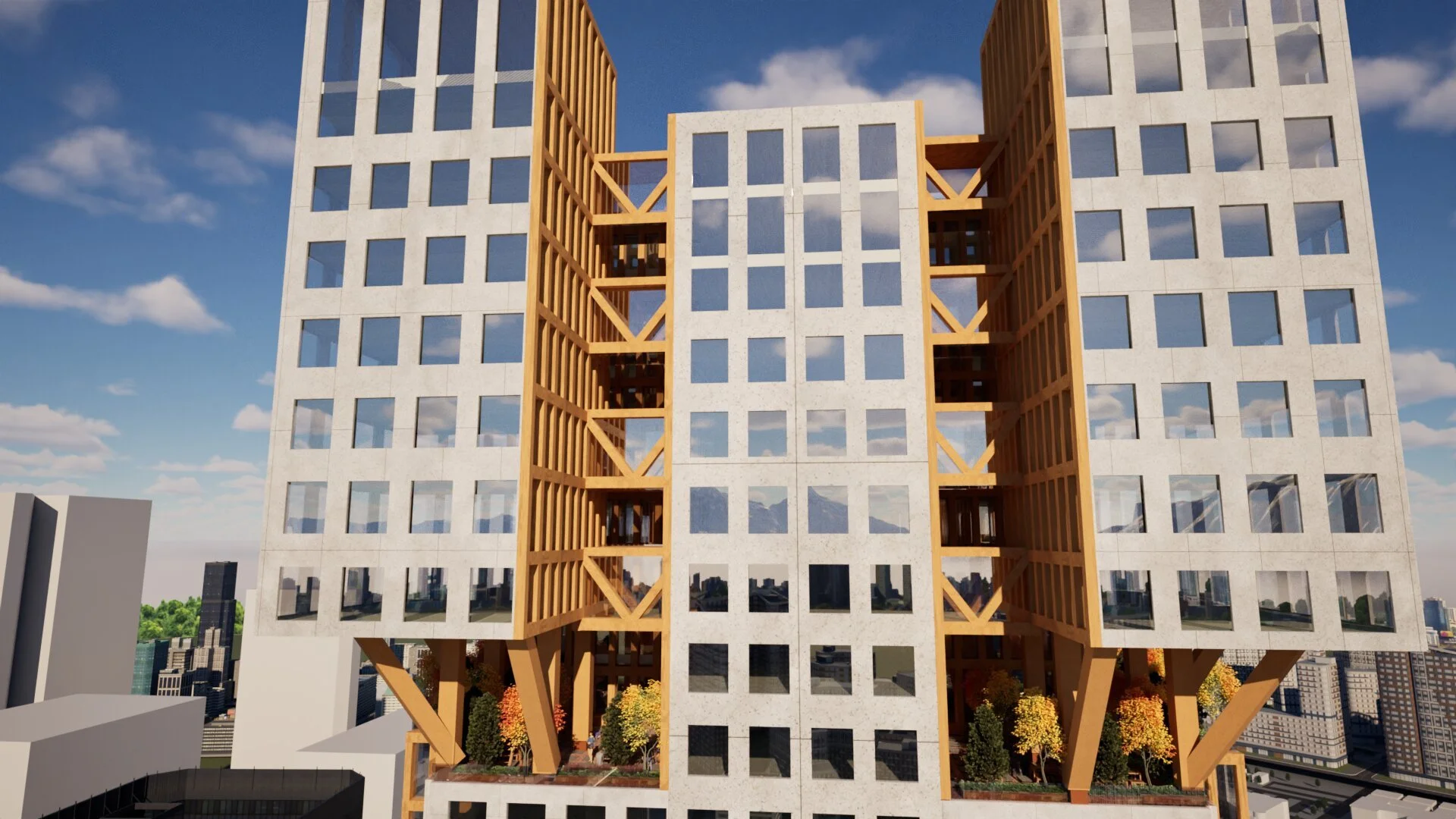
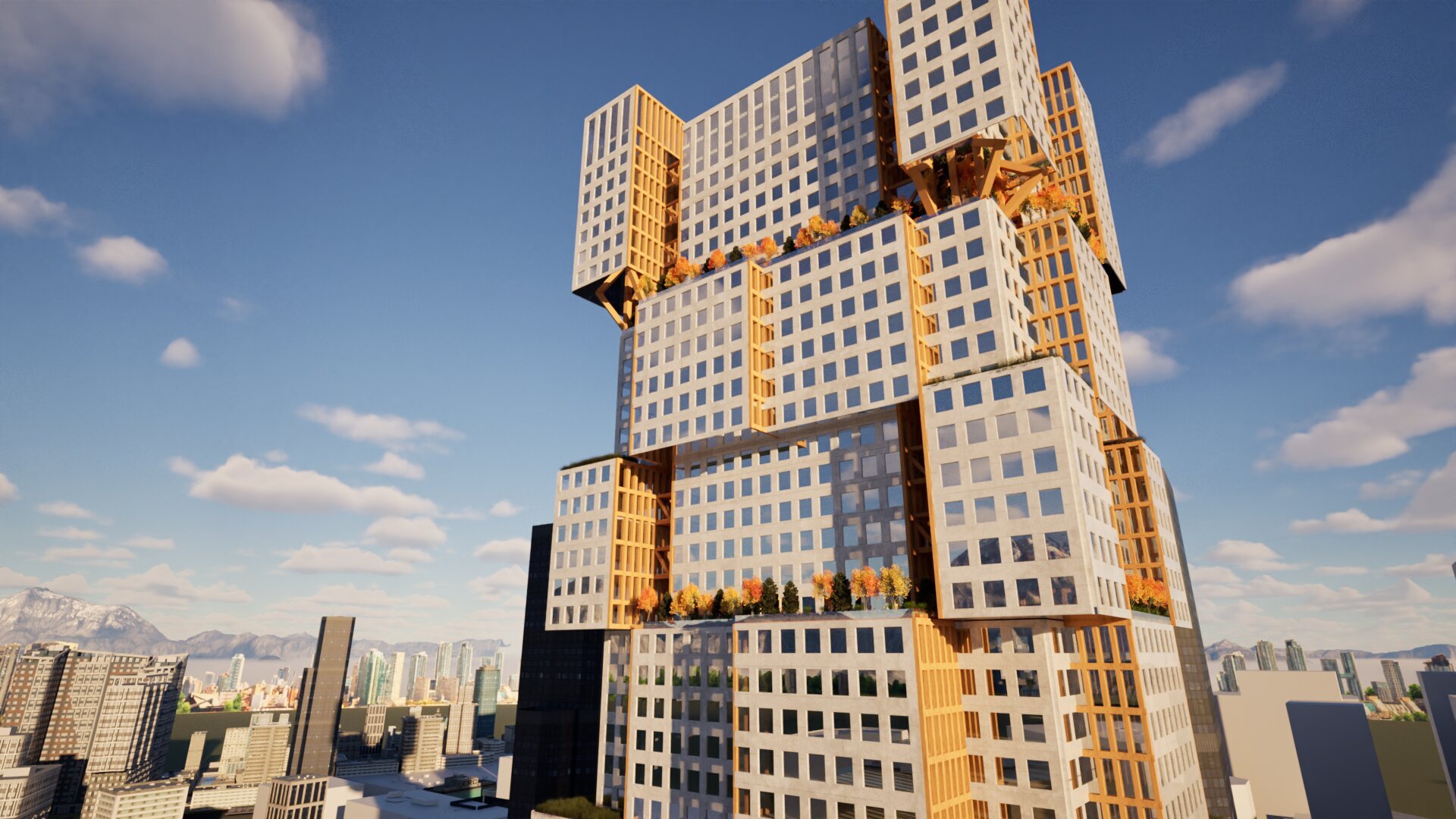
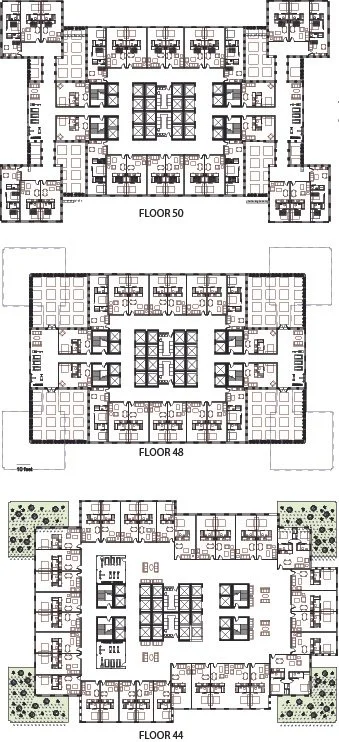
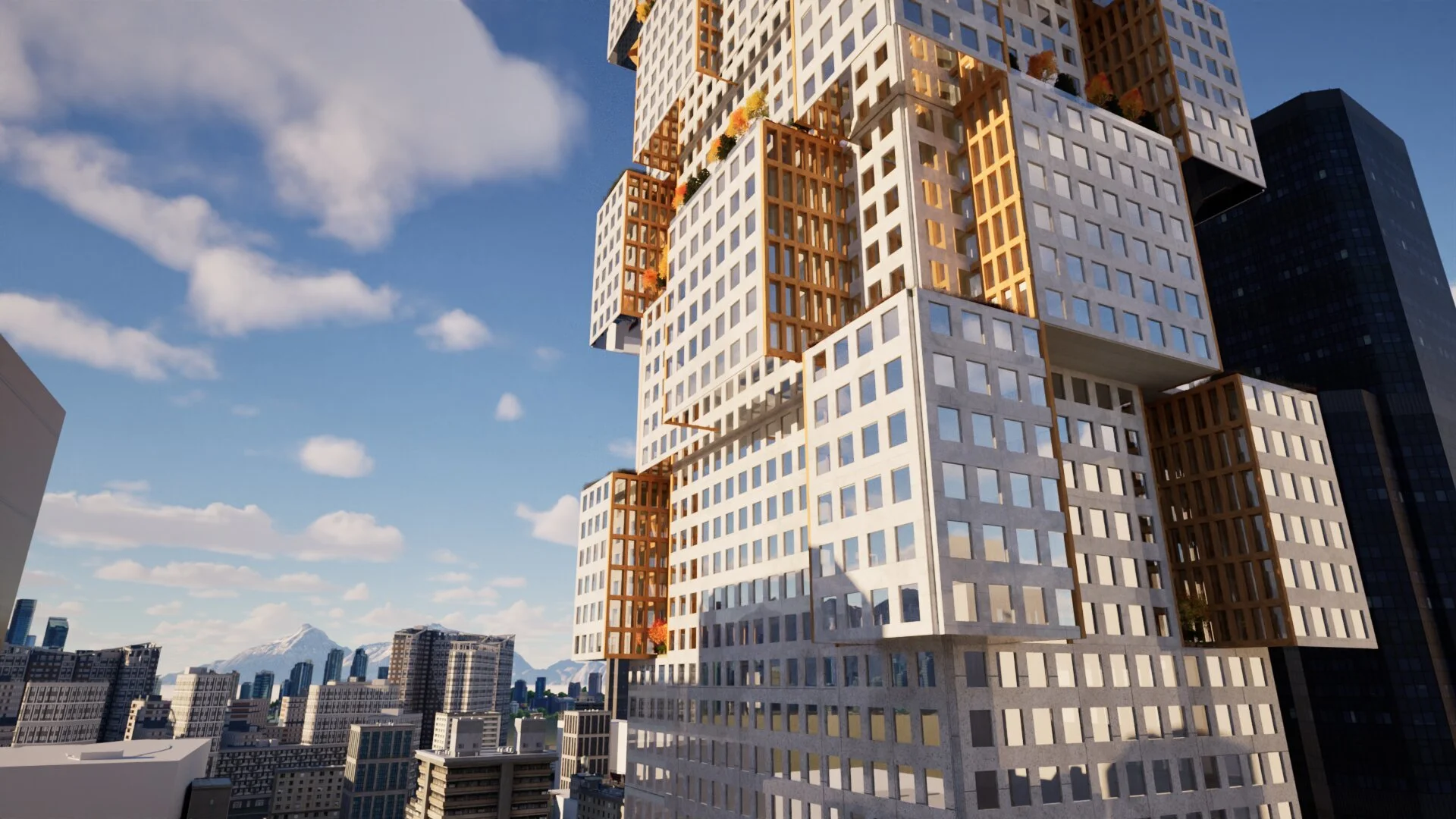
Well-ness involves the excavation of lateral light wells from existing floorplates, as well as the conversion of all horizontal extensions into mirrored heliostatic light surfaces. A 6 story lighwell requires a minumum of 30’ width for an opening. Therefore, we distribute 6 story light wells along the corners of the existing building, not only breaking up the floor plate into depths suitable for housing, but also introducing salubrious light and airflow around the units created.
And while Well-ness entails a considerable transformation, it does so in ways that reduce costs, increase revenues while also providing copious affordable housing in spectacular architectural form. Studies have indicated that adaptively reusing existing structures can decrease construction time from 6 to 12 months, resulting in a savings of 30% for the equivalent amount of new housing. At the same time, if developers tried to convert Republic Tower into housing using the conventional lightwell method, they would lose tens of thousands of square feet that would be converted into air. Wellness does not lose a single square foot. As such, a building that is currently renting 1/2 of its space to commercial uses has the possibility of renting 100% of its FAR because it will now attract precious residential housing in a city with a gross deficit in housing. Structural expenses will be minimized by both utilizing the existing concrete floorslabs and introducing sustainable and cost-effective mass timber structure. And, because the Republic Tower is older than 30 years and has less than 50% occupancy, it is eligible for special financing from Denver’s Adaptive Reuse upper Downtown Pilot Program.
A Well-ness Check on American Affordable Housing Aesthetics
Wellness proposes a corrective to the pitfalls of both modernist and neoliberal affordable housing models in the US. The conjuncture of modernism’s waning aesthetic and the negative politicization of welfare economics in the 1980s and 1990s proved fatal for government supported social housing. Indeed, social housing became an architectural epithet, rather than a modernist utopian ideal. And with it, the government’s provision of stable and reliable affordable housing all but disappeared. It’s replacement has not fared much better. Now perjoratively referred to as ‘lego buildings,’ the post-modernist mode of affordable housing was private or semi-private housing complexes, built in smaller packages, and often decorated with irregular, patch-work facades that attempted to distance contemporary affordable housing from its modernist predecessor. However, the ubiquity of 4 over 1 and 5 over 1 structures that consist of a concrete based for parking with superimposed timber housing above is now attracting a nation-wide backlash. Wellness proposes an alternative aesthetic.
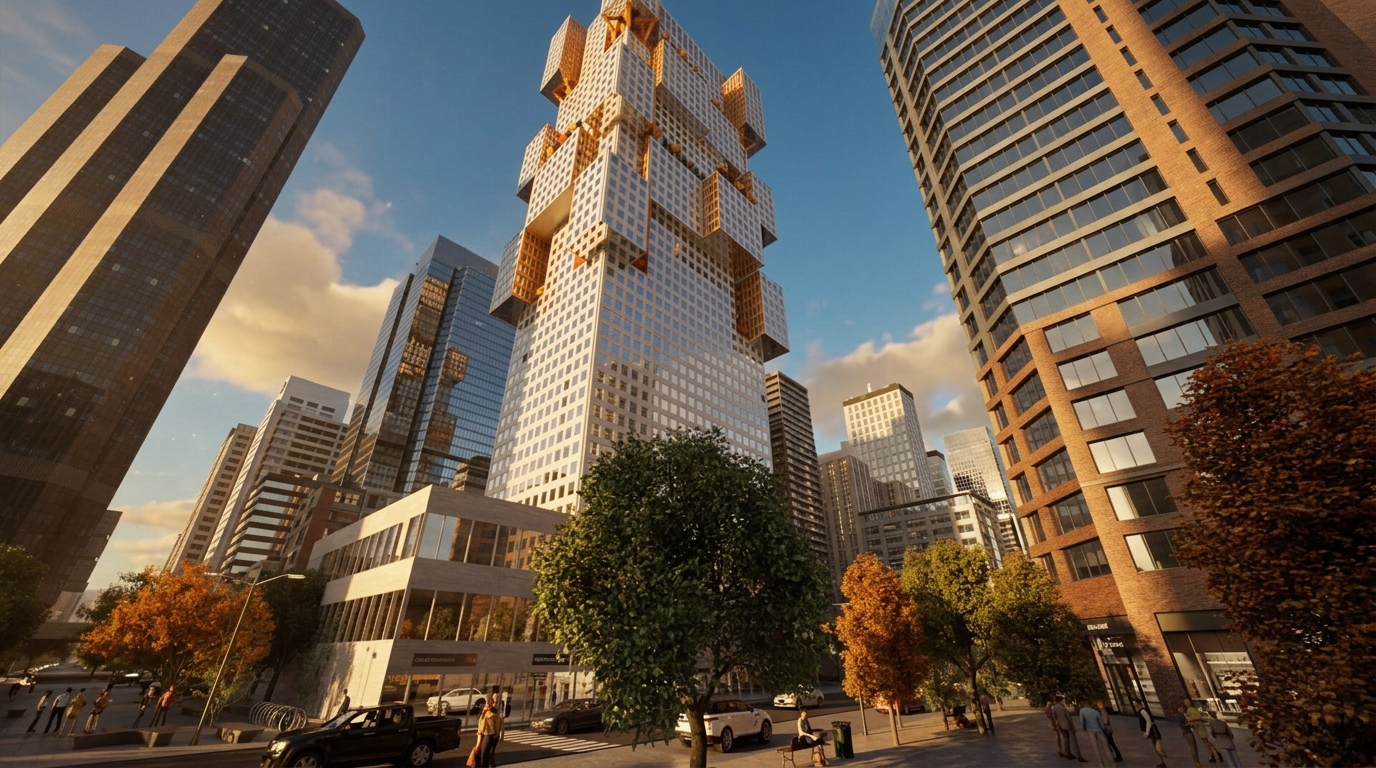
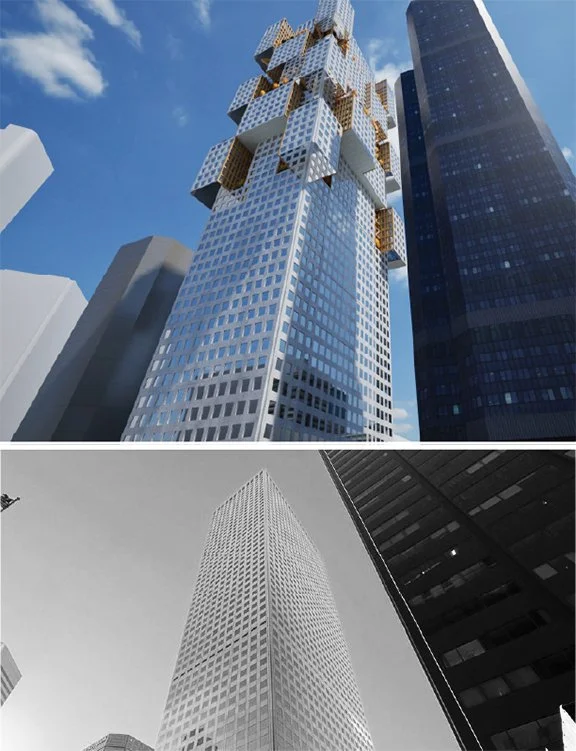
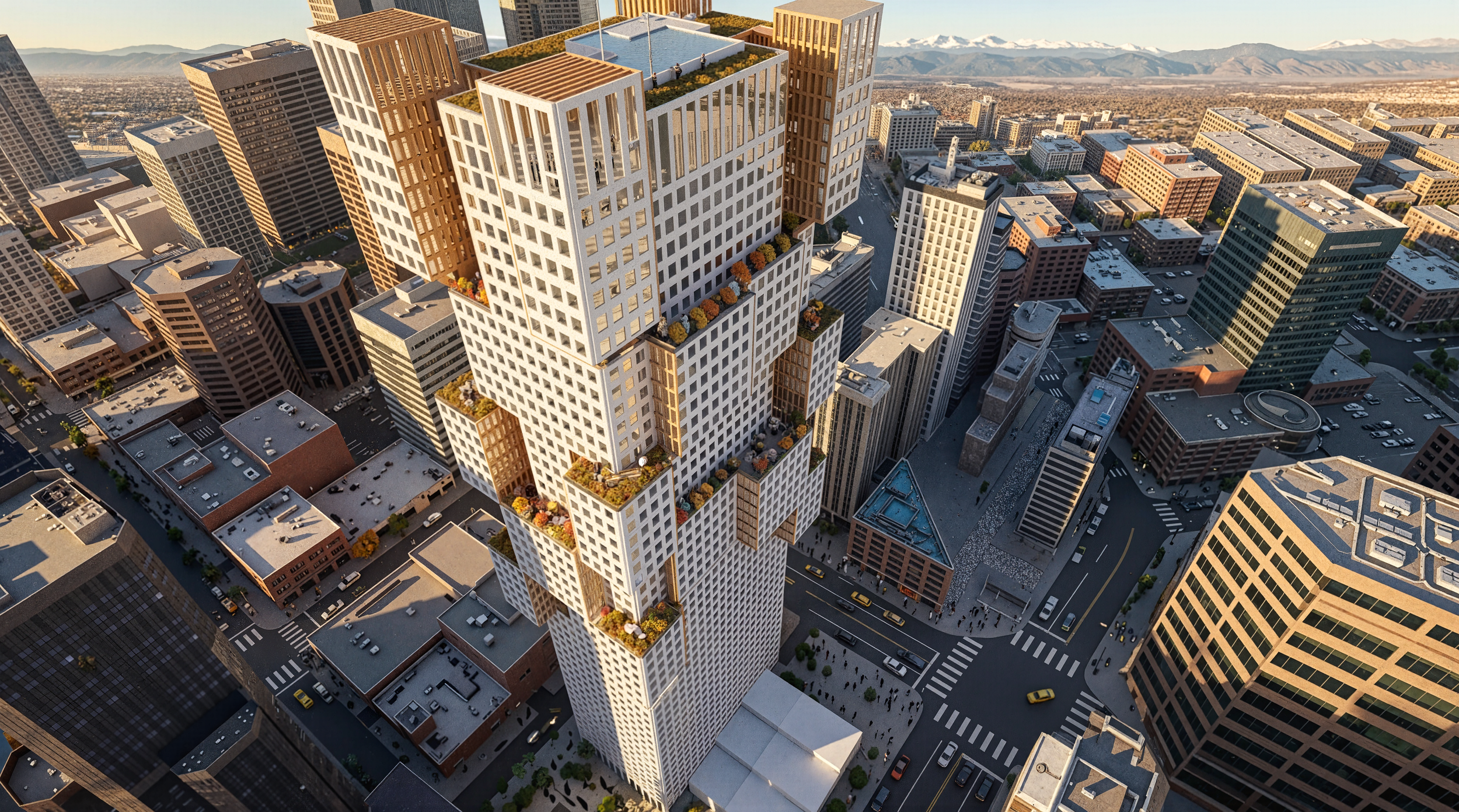
The Republic Tower Wellness conversion will occur only along the top 30 stories of the 56 story tower. This is because any story below this will be obscured by the neighboring hi-rises, thereby limiting the amount of light and airflow that can enter the Wellness atria. Nevertheless, the modification of just the top 30 stories can yield as much as 26 one and two bedroom dwellings per floor, or an additional 780 units of housing within a single building! In addition to the added stock of beautiful and salubrious affordable housing, each Wellness atria will create an outdoor plaza for neighboring residents. 10 floating plazas will create some of the city’s finest elevated outdoor gathering spaces.
Before & After
Revival by removal
axon development
Before & After
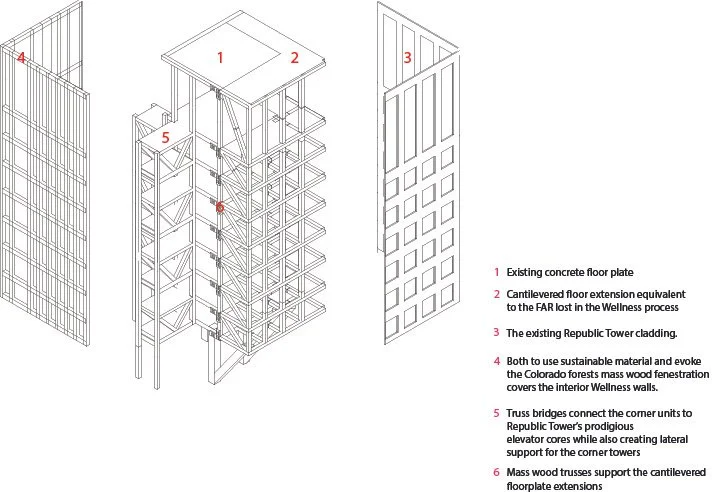
structural diagram
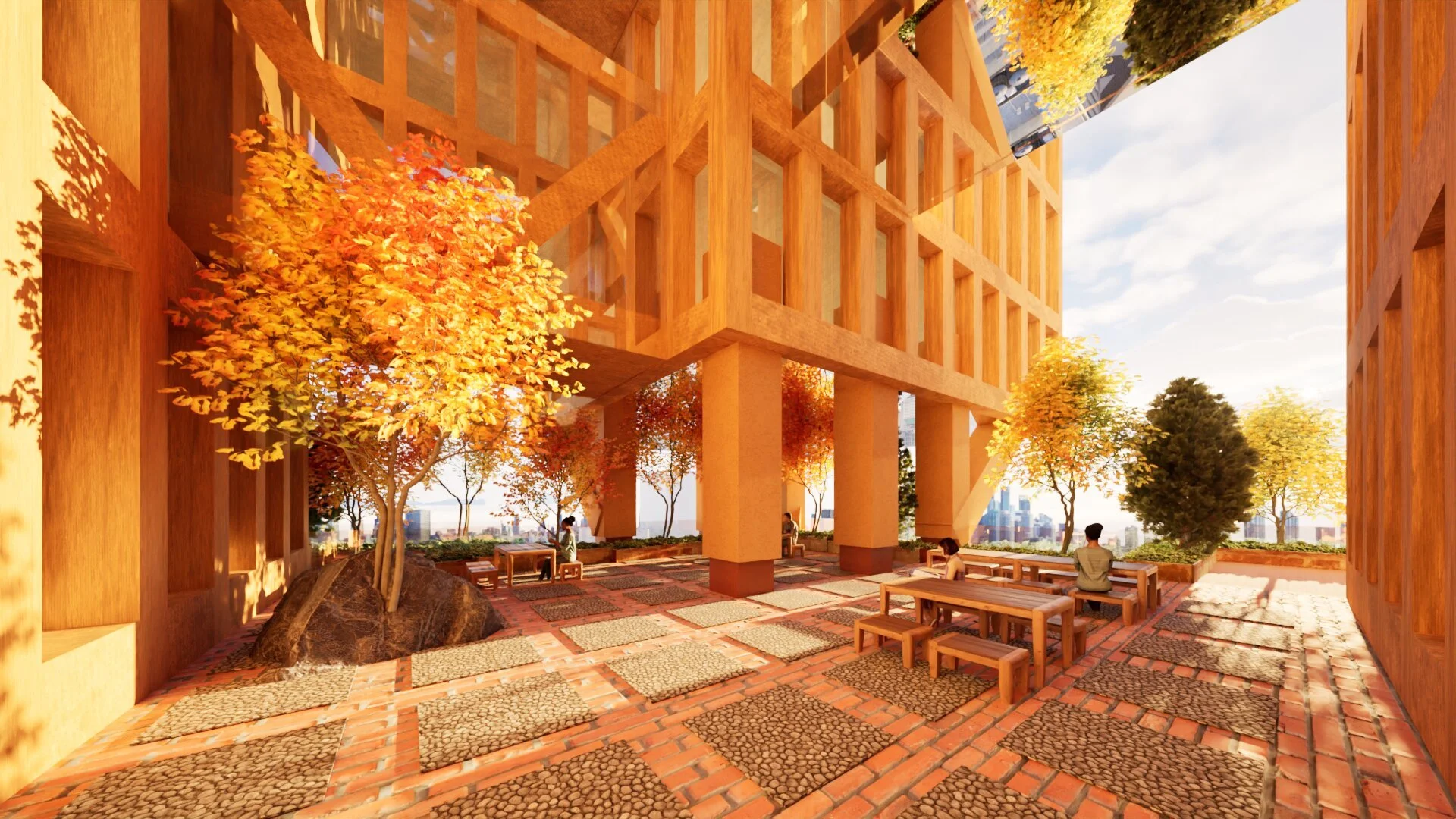
sky plazas
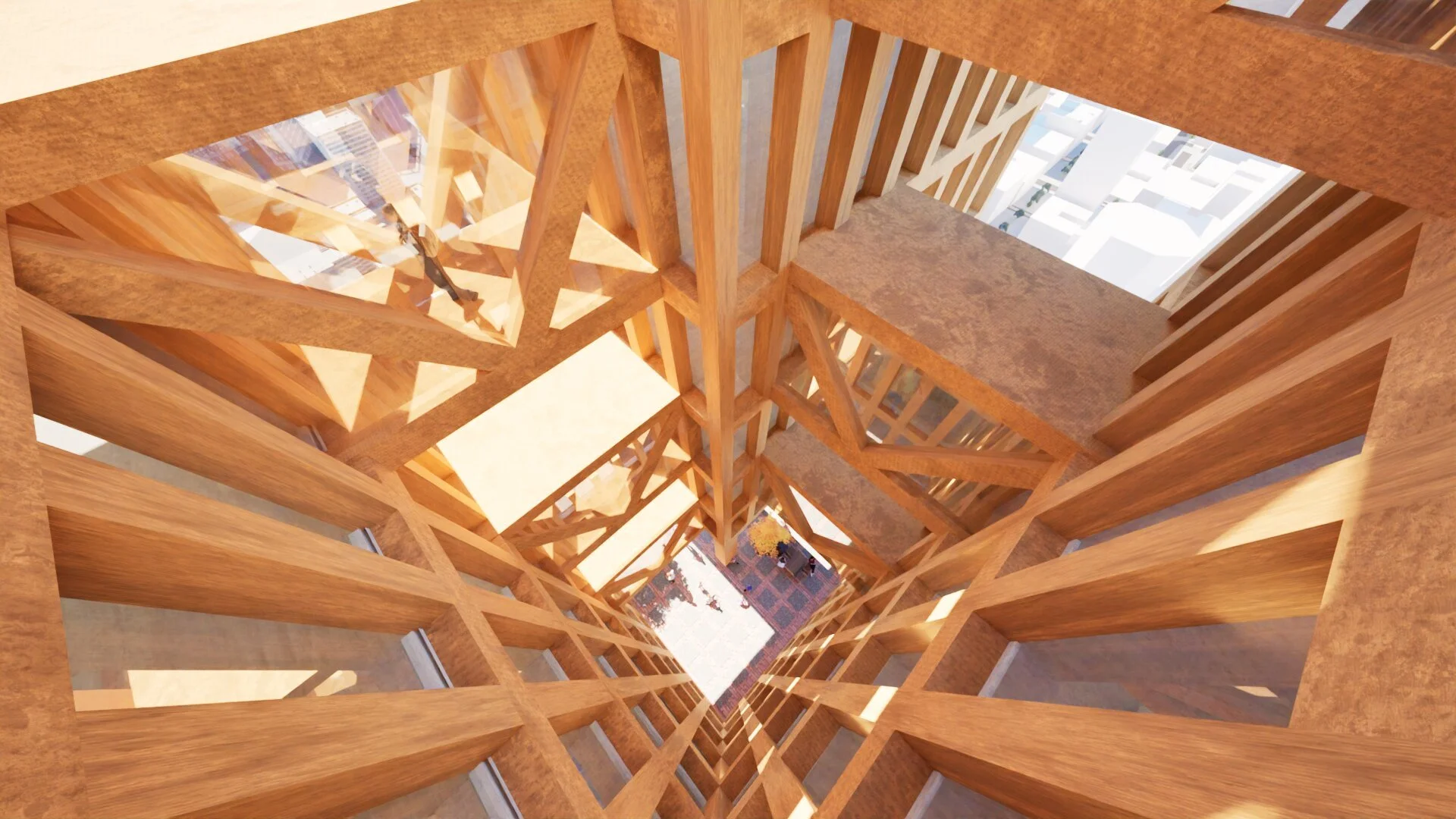
view from a Well-ness bridge


Plans
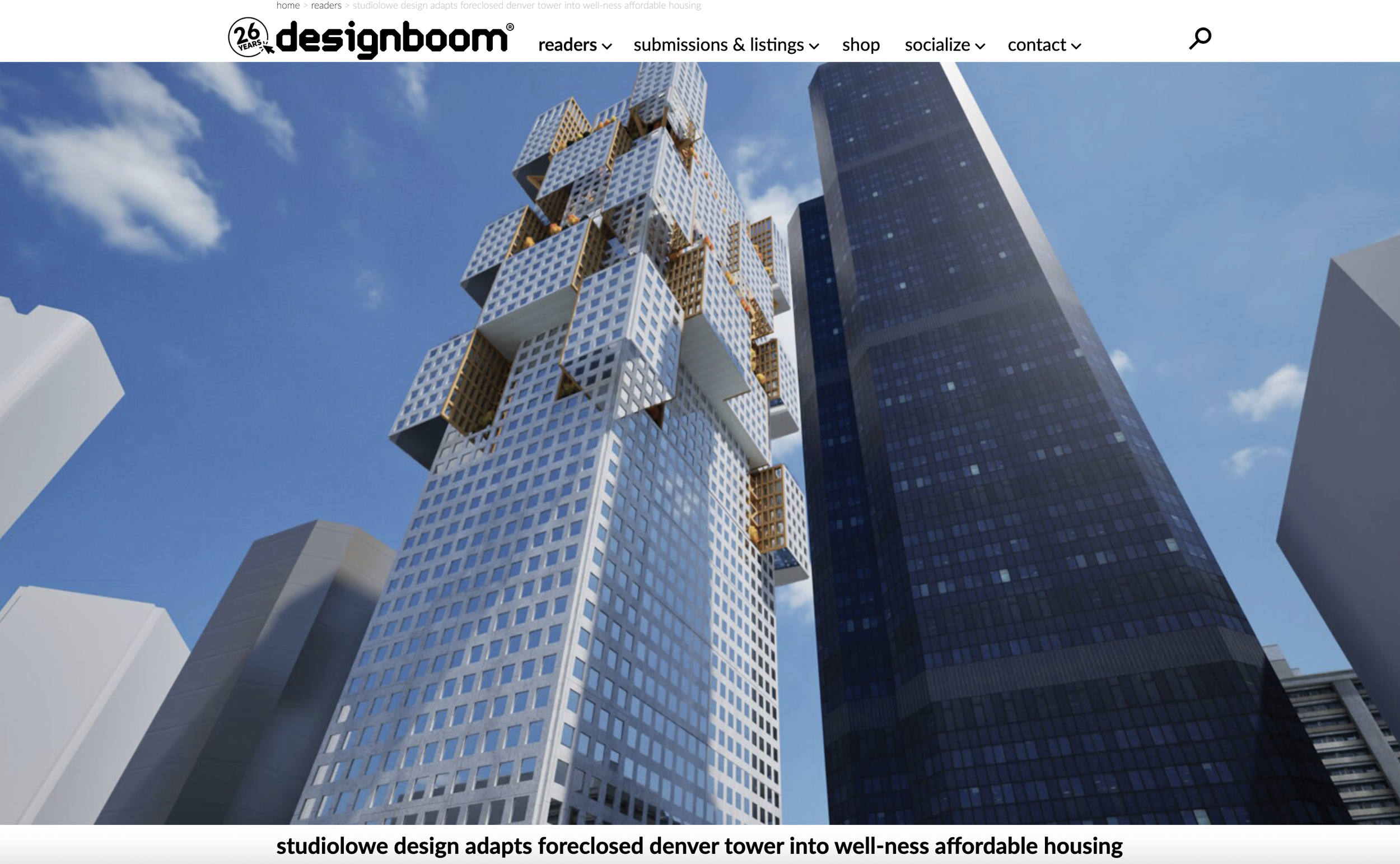
Designboom features our Well-ness design